Unveil the mechanisms driving correlated alkali ion and proton transport in polymers.
The goal of this Thrust is to understand and realize new mechanisms of superionic conductivity (Li+, Na+, H+) in polymer-based materials (i.e., > 1 mS/cm at room temperature).
Key questions:
- What are the fundamental physics controlling charge transport in polymers and what are the microscopic mechanisms that determine energy barriers for ion hopping?
- Why does correlated ion motion suppress charge transport in polymeric materials, while it enhances charge transport in superionic glasses?
-
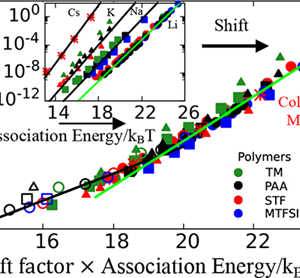
Theoretically Understanding the Role of Cation Size on Activated Ion Dynamics in Polymerized Ionic Liquids and Glasses
Macromolecules just accepted
Publication Date: 20260812 -
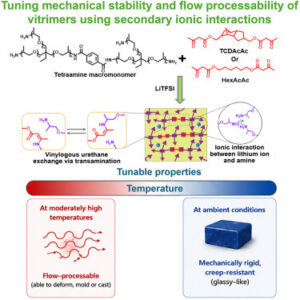
Overcoming Mechanical Stability-Flow Processability Trade-Off of Vitrimers using Ionic Interactions
Cell Rep. Phys. Sci. 2026, 7, 103417
Publication Date: 20260715 -
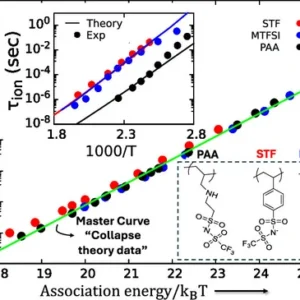
Theoretically Unveiling the Factors that Control the Activated Ion Mobility in Lithium-Based Polymerized Ionic Liquids and Glasses
ACS Cent. Sci. 2026, 12, 658
Publication Date: 20260504 -
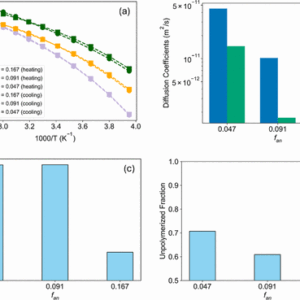
Understanding the Influence of Chain Architecture on the Transport Quantities of Polymer Electrolytes with Covalently Bonded Anions
ACS Appl. Energy Mater. 2026, 9, 1045
Publication Date: 20260108 -
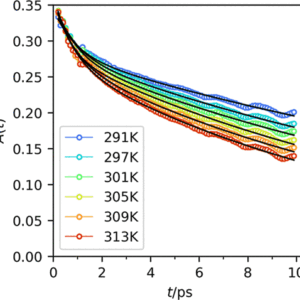
Real-space local dynamics in 1,2,3-triazole using inelastic neutron scattering
J. Phys. Chem. B 2025, 129, 12330
Publication Date: 20251101 -
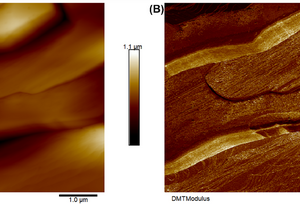
A Solid State Zwitterionic Plastic Crystal with High Static Dielectric Constant
Adv. Mat. 2026, 38, e17774
Publication Date: 20260116